Why Enterprise Software Needs to Separate the Data Plane from the Control Plane
Vortex Quantitative ·
Separating the data plane from the control plane allows enterprise software to run business logic at scale without unnecessarily copying data into a separate platform.
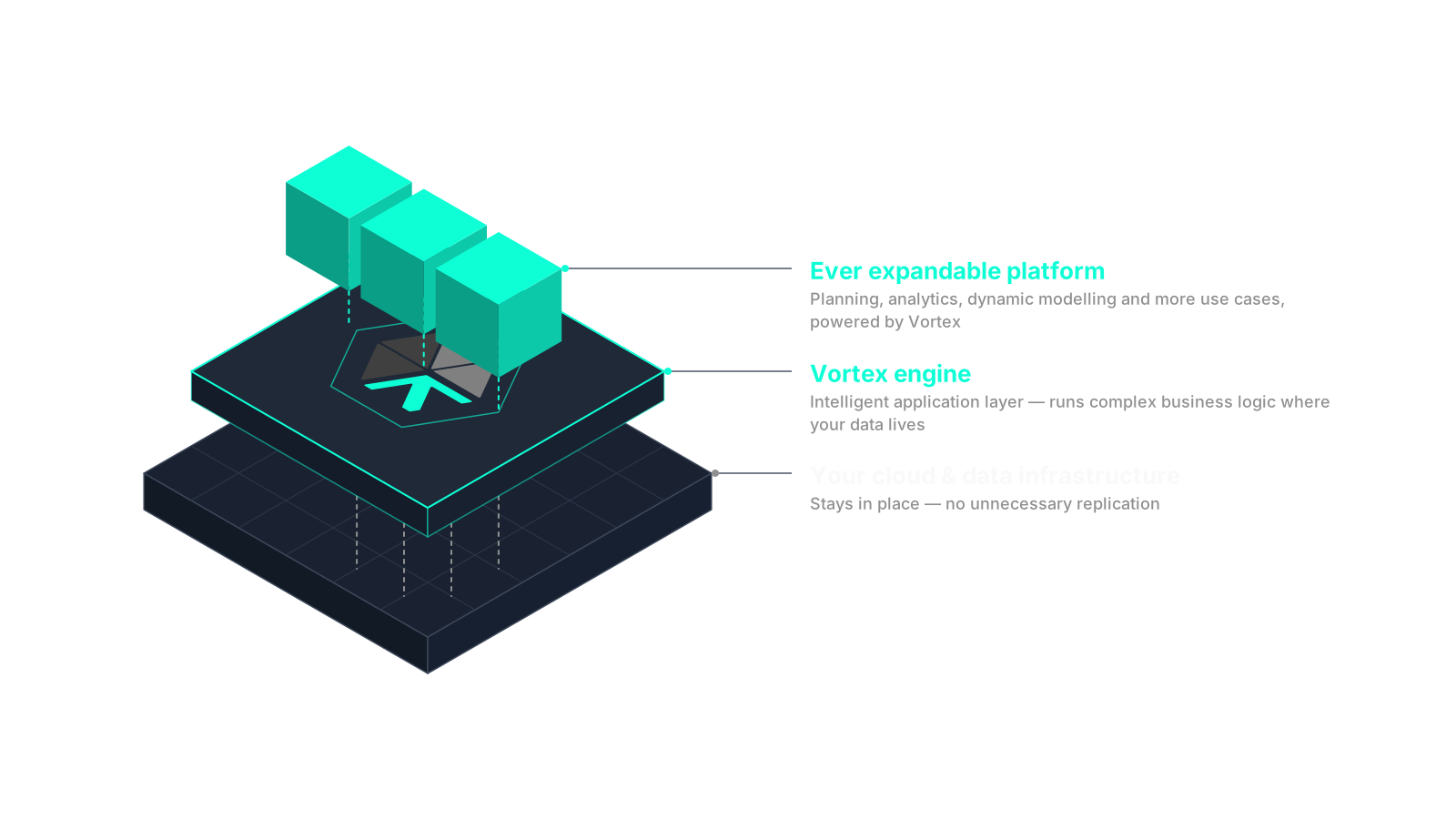
Vortex applies this architecture as an intelligent application layer over an organization’s existing cloud and data infrastructure.
This helps organizations reduce data replication, retain control of their data and cloud choices, and build governed applications and AI workflows.
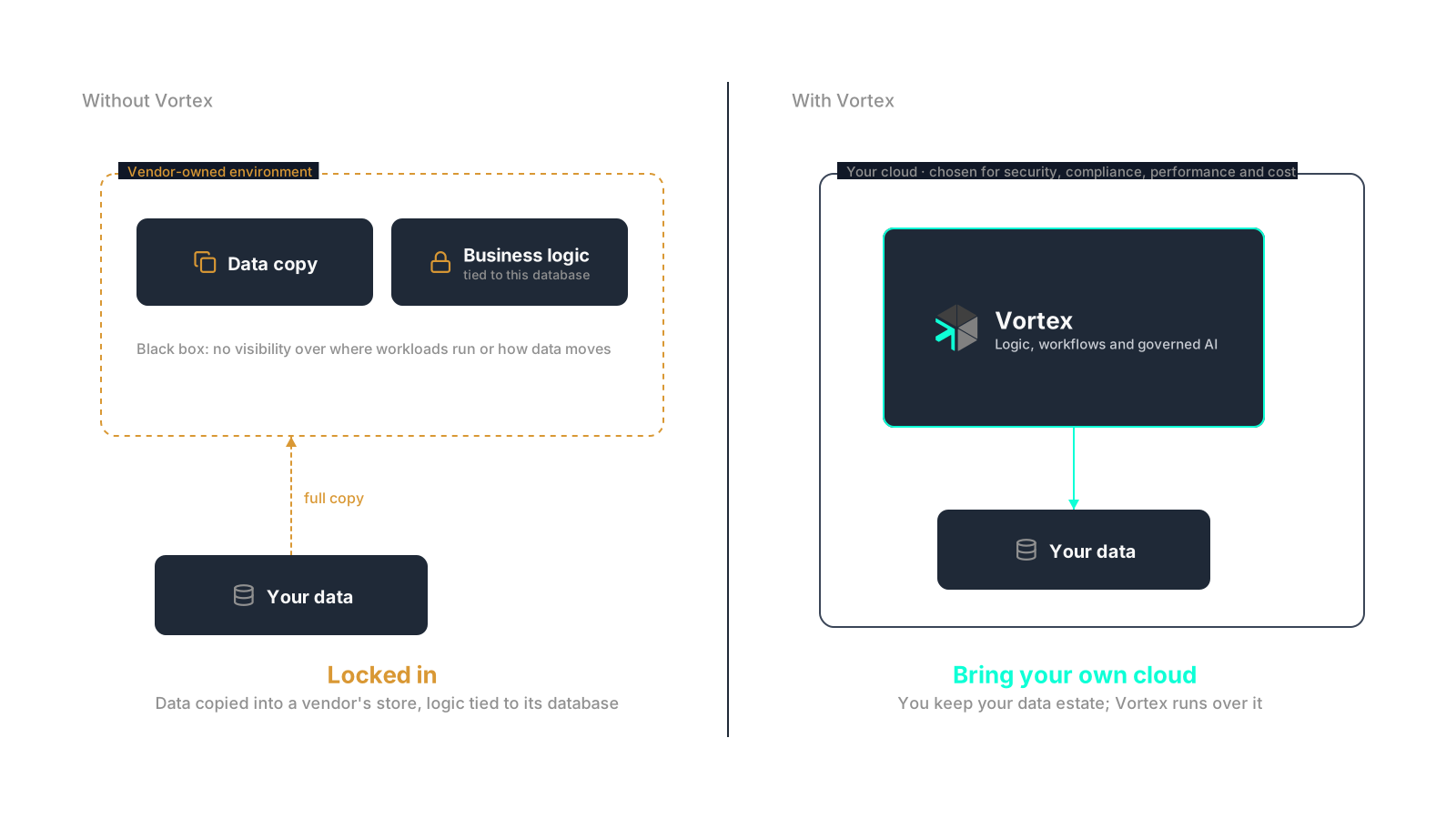
Enterprise software has spent decades solving one problem by creating another. To run planning, reporting, consolidation, or modeling processes, platforms often copy data from the systems where it originates into a separate, and often vendor-owned, environment.
This model made sense when data volumes were smaller and analytical systems were more isolated. Today, however, data replication increasingly creates friction. Organizations must manage additional pipelines and duplicate storage, reconcile competing versions of the same information, and accept that business logic is tied to a particular database or deployment model.
A different architectural approach is now possible: keep data where it belongs, while separating the systems that govern business logic from those that process data at scale. In other words: separate the data plane from the control plane.
The cost of data replication
Data replication is not inherently wrong. A local copy can be useful for a defined analytical workload, resilience requirement, or performance needs. The problem begins when replication becomes the default condition for every new application.
Consider a finance team that needs to combine operational data, planning inputs, and financial models. In a conventional setup, data may move from source systems into a warehouse, then into a planning platform, then into reporting tools and spreadsheets. Every movement creates another process to monitor and another version to reconcile.
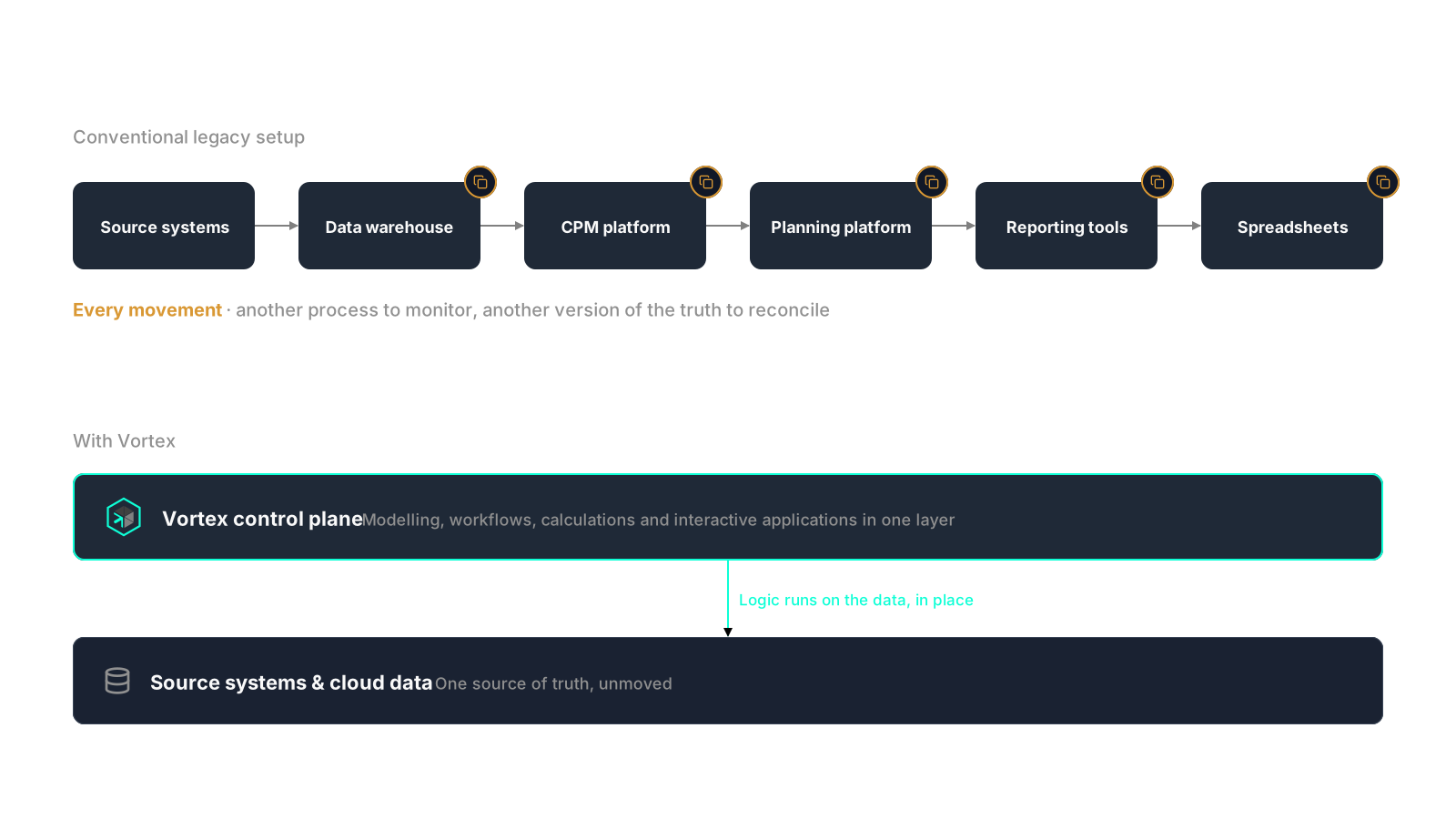
This is particularly difficult where data is large, sparse, highly dimensional, or subject to strict governance requirements. The architecture can become the limiting factor before the model itself does.
The market’s empty quadrant
For years, multidimensional databases (or cubes) such as Essbase addressed a real need, bringing financial modeling, hierarchies, write-back, and analytical calculations into one environment. But they were designed for an earlier era, when centralizing data inside the application was often the practical way to run complex calculations.
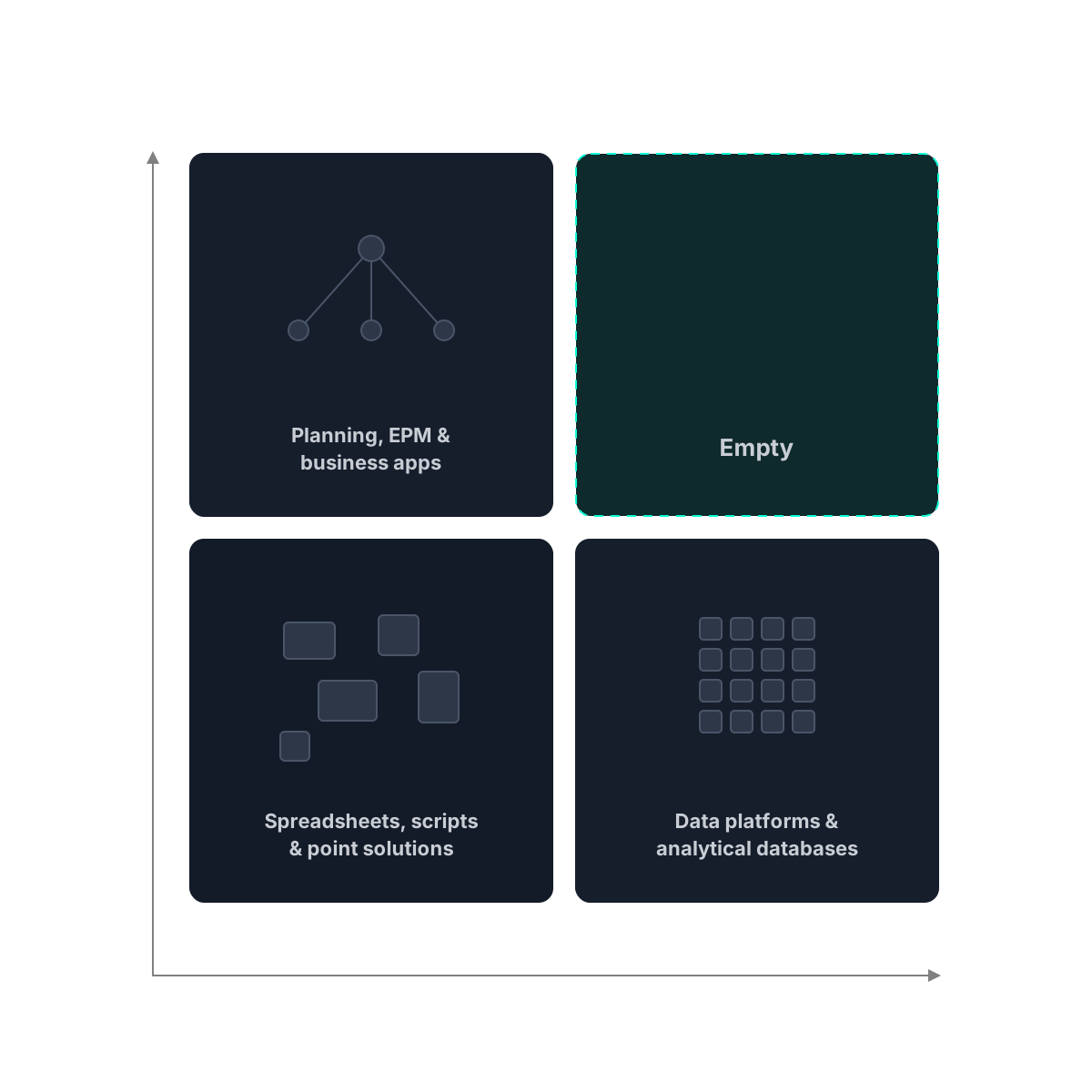
Today, the market has split. Data platforms are built for large volumes and cloud-scale processing, while planning and EPM tools are built around financial workflows and business logic. Organizations must often connect several products or choose between analytical scale and modeling flexibility.
No one solution can both run complex calculations and handle large data volumes at scale. Conventional SaaS introduces another trade-off: vendors may determine where workloads run, how data moves, and how performance scales. That leaves an empty quadrant: a platform that applies sophisticated business logic to enterprise data at scale without moving it into another proprietary store.
A new architecture: separate data plane and control plane
Closing that gap requires an architecture that separates the systems governing business logic from the systems processing data at scale. The distinction between a data plane and a control plane offers a useful way to understand this.
The data plane is where data-intensive work happens. It is responsible for processing, storing, reading, and writing the information required to execute a workload. In an enterprise setting, that may include data warehouses, operational systems, cloud infrastructure, and the processing capacity closest to the underlying data.
The control plane is where the system defines what should happen. It manages configuration, policies, workflows, permissions, and orchestration. It is where teams define the calculations, models, actions, interfaces, and rules that make an enterprise application useful.
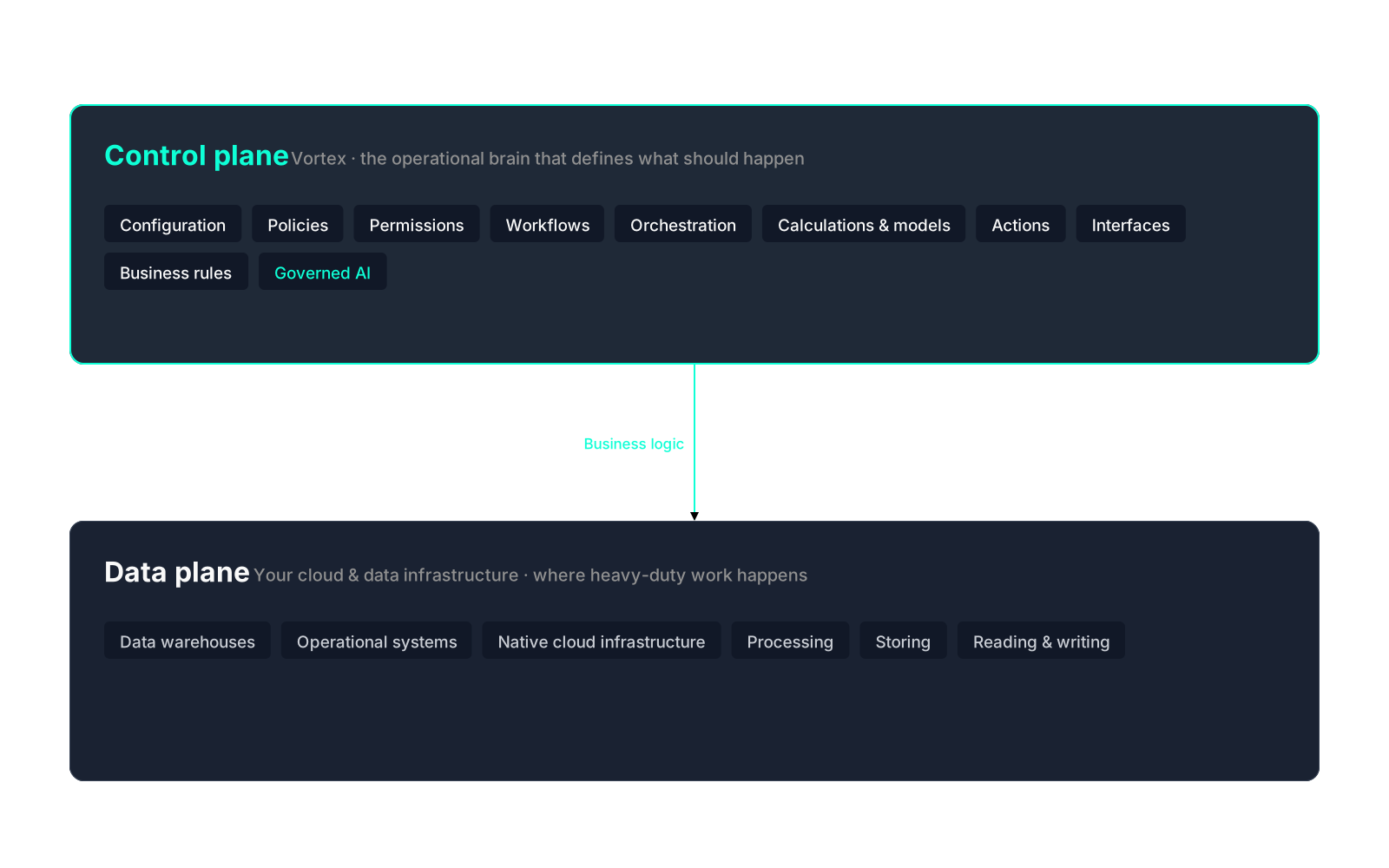
Separating the two does not mean separating logic from data entirely. It means separating data ownership and processing from the business logic used to operate on that data. This is the architectural separation Vortex puts into practice.
Bringing logic to the data with Vortex
Vortex applies this separation as an intelligent application layer over the cloud and data infrastructure an organization already uses. It runs complex business logic where the data lives, rather than requiring a full copy of enterprise data in a separate vendor-owned environment.
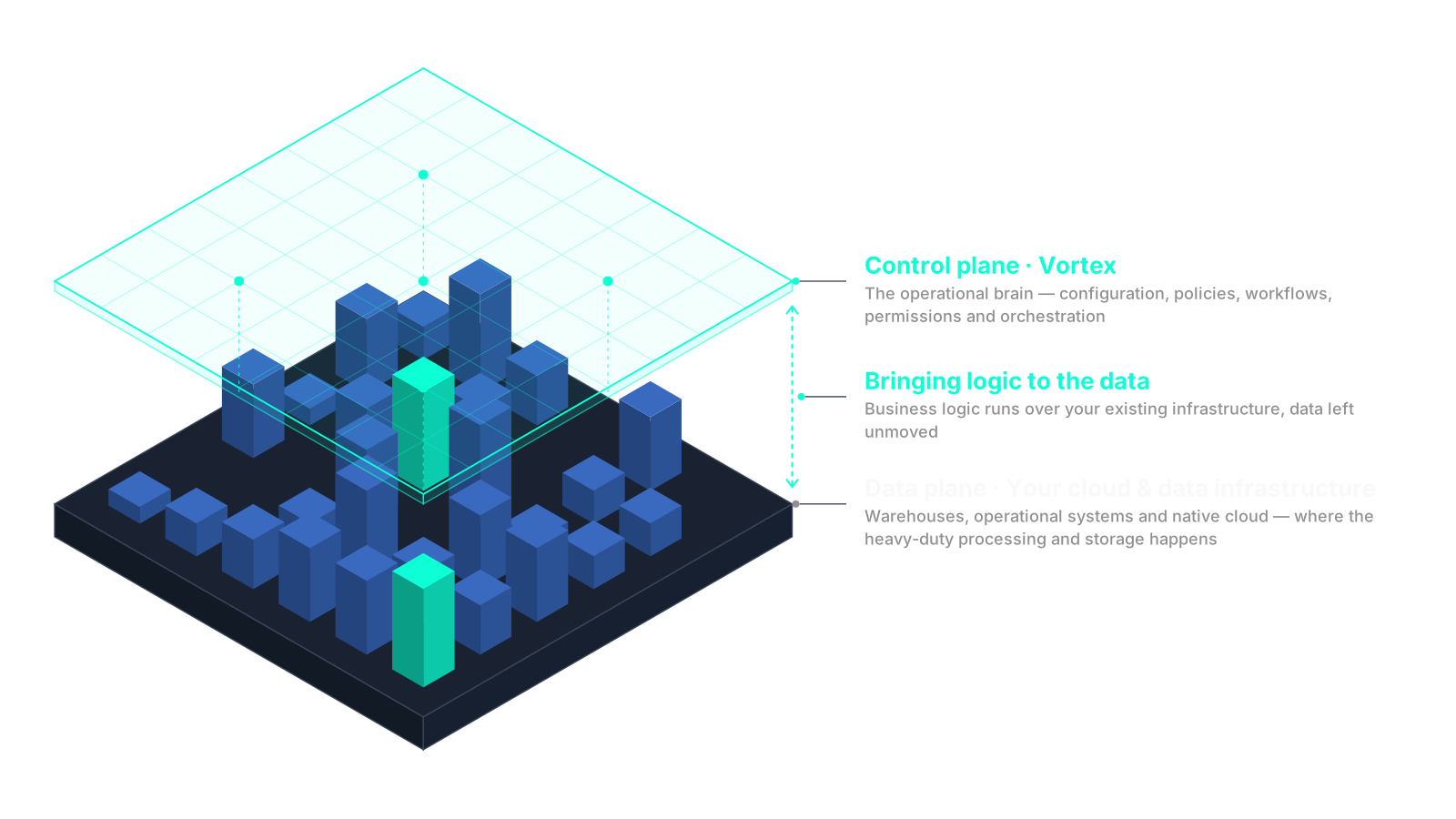
The organization retains control of its data estate, while Vortex provides the layer for modeling, workflows, calculations, and interactive applications.
This supports a bring-your-own-cloud model. Customers can use the infrastructure they have selected for security, compliance, performance, and/or commercial reasons, rather than being forced into a single vendor environment. It also reduces the need to create new data silos simply to introduce a new application.
Configurable Logic and Governed AI
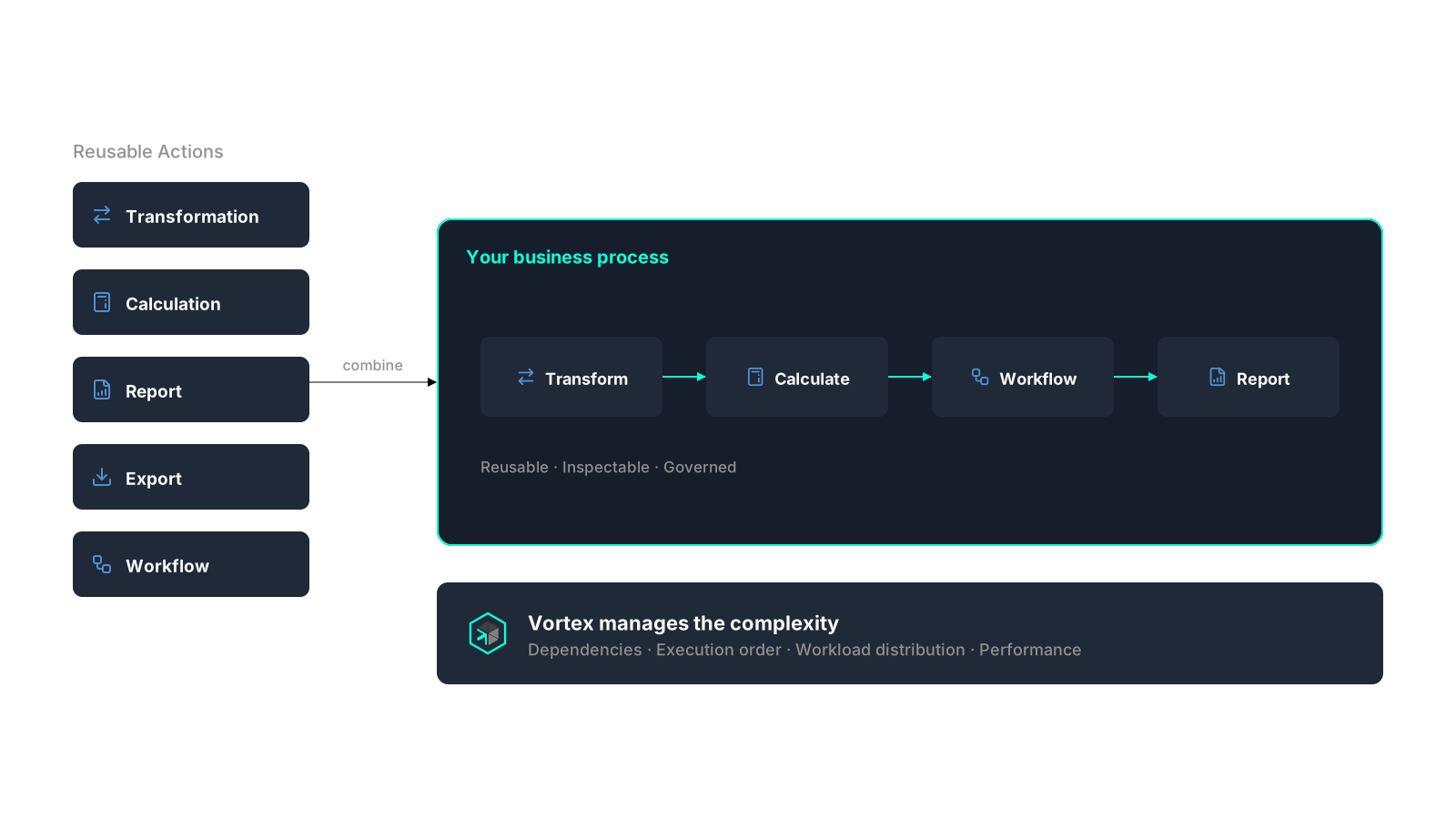
At the core of Vortex is a system of reusable Actions: modular building blocks that can be configured, combined, inspected, and applied to a specific business process. The platform manages the underlying complexity (data types, dependencies, execution order, workload distribution and performance) while partners and customers focus on the business logic that makes an application distinctive.
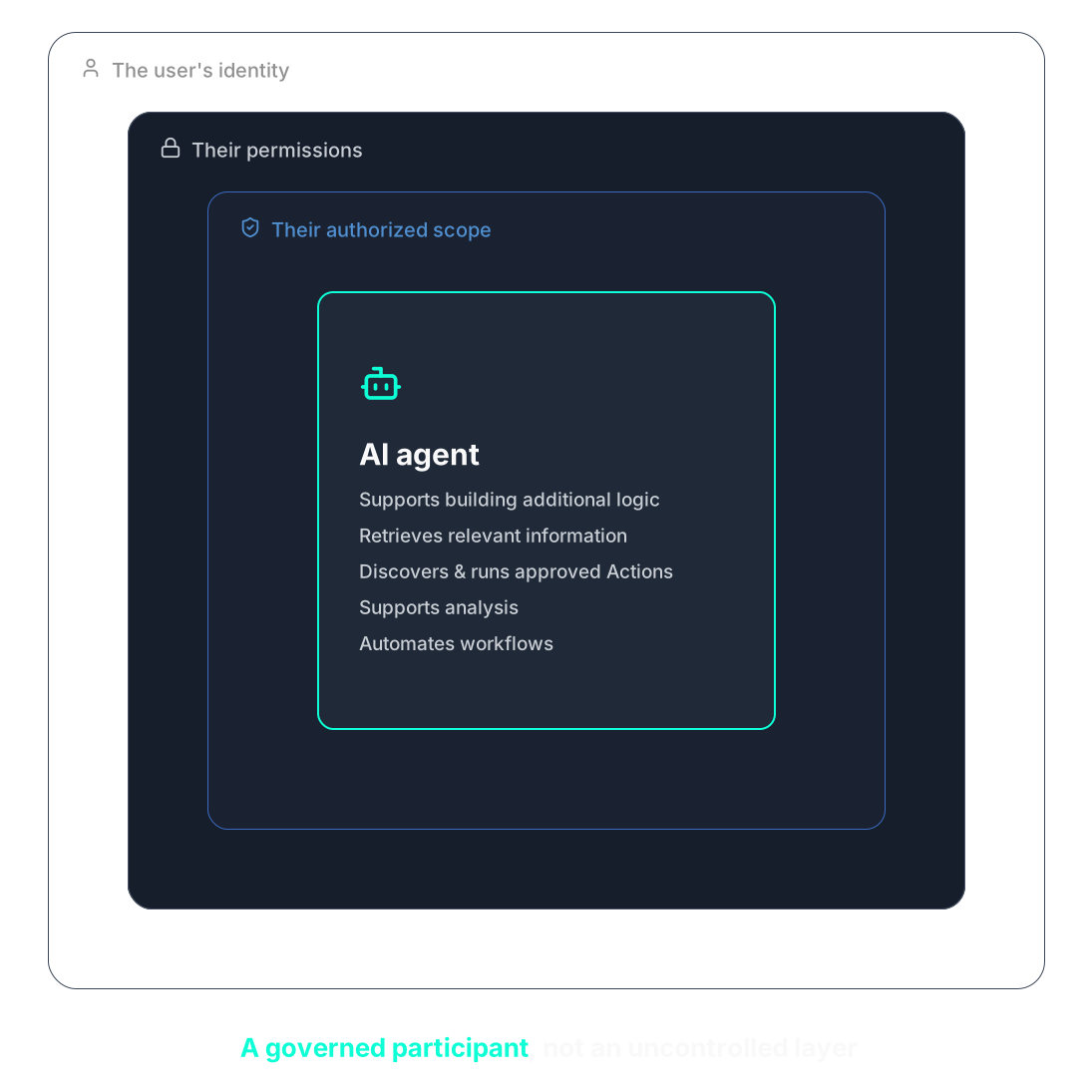
In addition, this same architecture provides a practical foundation for enterprise AI. In Vortex, an AI agent can operate as a governed user of the system, not as an all-access integration with broad, unstructured access to sensitive data.
The agent works with an identity, permissions, and an authorized scope. It can retrieve relevant information, discover and execute approved actions, support analysis, and automate workflows without bypassing the controls that govern human users. This is how AI becomes useful in enterprise software: not an uncontrolled layer on top of the business, but a governed participant within it.
FAQ
What is the difference between a data plane and a control plane?
The data plane processes, stores, reads, and writes data. The control plane defines policies, permissions, workflows, configuration, and business logic.
Why does data replication create friction in enterprise software?
Replication can create duplicate storage, additional pipelines, competing versions of the same information, and more reconciliation work.
How does Vortex reduce unnecessary data replication?
Vortex applies business logic over an organization’s existing cloud and data infrastructure, reducing the need to move data into a separate vendor-owned platform.